

What Paint Does to Sparkle: Selecting Glitter for Coatings
Paint can bury, scatter or chemically alter glitter. A successful coating keeps enough particles correctly oriented and stable after the film dries.

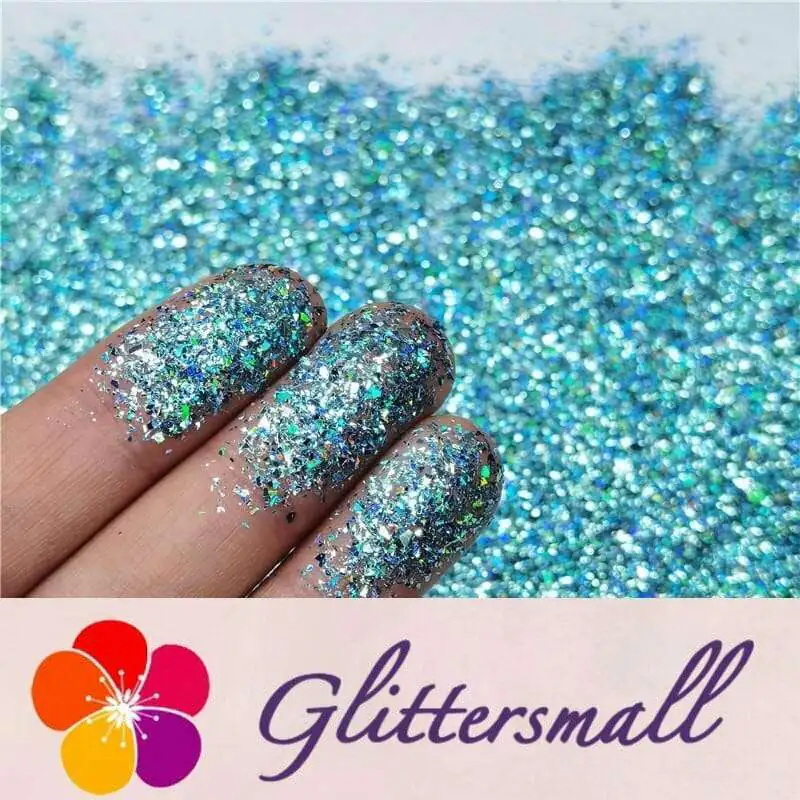
Wet paint can look promising because particles float at the surface and the film is still glossy. After drying, opaque pigment may bury reflections and a thin film may leave larger particles exposed. The dry sample, not the mixing cup, is the honest judge.
The short answer: Choose a particle the dry film can carry and a finish that remains visible after pigment surrounds it.
What needs to be decided before you shop
Start with the object that must be made. Record water- or solvent-based system, wet and dry film thickness, paint opacity, mixing shear, and application equipment. These are not administrative details. They determine whether the loose material can produce the required finish without adding avoidable labor or risk.
- Water- or solvent-based system: write down the actual production condition, not an idealized description.
- Wet and dry film thickness: write down the actual production condition, not an idealized description.
- Paint opacity: write down the actual production condition, not an idealized description.
- Mixing shear: write down the actual production condition, not an idealized description.
- Application equipment: write down the actual production condition, not an idealized description.
This brief also gives a supplier something concrete to answer. “I need glitter for paint” invites a broad catalog response. A brief that names the medium, size range, finish, quantity and use condition can be matched to a specific product code and sample.
Pigment can hide reflection
Opaque paint surrounds the particle and can reduce sparkle. Surface broadcast or clear layers may produce a different effect.
When testing glitter for paint, hold water- or solvent-based system steady while changing only the feature discussed here. Use the same base, measured amount and application tool. A sample that changes particle size and finish at once may look dramatic, but it cannot show which change caused the result.
Read this glitter for paint sample at its normal viewing distance. Close inspection reveals edge profile and distribution; a longer view shows whether the chosen wet and dry film thickness reads as a continuous field, distinct flashes or almost no sparkle. Those views answer different questions, so record both.
Mixing method affects orientation
Aggressive mixing can introduce air or damage a delicate finish. Follow coating instructions and test additions carefully.
For glitter for paint, surface build belongs in the visual decision. Larger or thicker particles may demand more material above them, while a finer wet and dry film thickness can create dense coverage quickly. Extra clear coat, sanding, sorting or hand placement belongs in this article’s cost calculation even when the glitter itself is inexpensive.
If this glitter for paint project needs both coverage and visible points of light, compare a controlled mixed-size sample with the single-size option. Small particles can close gaps while larger particles remain legible against the chosen paint opacity. Record the ratio; an attractive unmeasured blend will not support a repeat order.
Exposure extends beyond cure
For exterior or demanding uses, evaluate relevant light, moisture, cleaning and wear conditions.
A product photograph cannot reliably show how paint opacity interacts with mixing shear. Cameras compress highlights, screens shift color and studio lighting usually favors sparkle. Make a glitter for paint sample over the intended base and inspect it under the light that matters to the buyer or end user.
Compatibility in this glitter for paint decision needs a complete cure or dry cycle. Immediate color is not enough. Look for migration, loss of reflective finish, clouding, uneven orientation and any change connected to application equipment.
Build a sample that answers a real question
A useful glitter for paint test is small, controlled and easy to compare. Use the actual base color and the same resin, paint, gel or adhesive planned for production. Prepare one control and change only one variable at a time: particle size, finish, loading or placement. Label every sample before mixing; similar effects become surprisingly difficult to identify once several panels are on the bench.
For repeat glitter for paint work, turn the approved sample into a compact specification. Keep the product code beside water- or solvent-based system, wet and dry film thickness, paint opacity, mixing shear, application equipment. A color name or photograph can help someone browse, but neither should become the repeat-order reference.
Reopen this approval whenever water- or solvent-based system or application equipment changes. The previous sample remains useful evidence for the recorded system; it is not proof that a new resin, coating, cosmetic base, adhesive or contact condition will behave the same way.
How the variables behave together
Specifications are often reviewed one line at a time, but the finished result is produced by interactions. A change in water- or solvent-based system can alter the importance of wet and dry film thickness; a change in paint opacity may add work at the stage where mixing shear is controlled. The following review is deliberately connected rather than a list of isolated definitions.
Water- or solvent-based system
Treat water- or solvent-based system as a working condition, not a catalog adjective. Put a measurable or observable value beside it wherever possible, then compare it with wet and dry film thickness. If those two entries conflict, solve the conflict in a sample before adding more color or effect choices.
The glitter for paint acceptance note should describe what happened in the finished piece: how the material covered, where reflections appeared, what the surface felt like and how much correction was needed. Link that note to paint opacity, because a visually acceptable result can still be impractical when the neighboring production condition changes.
Wet and dry film thickness
Treat wet and dry film thickness as a working condition, not a catalog adjective. Put a measurable or observable value beside it wherever possible, then compare it with paint opacity. If those two entries conflict, solve the conflict in a sample before adding more color or effect choices.
The glitter for paint acceptance note should describe what happened in the finished piece: how the material covered, where reflections appeared, what the surface felt like and how much correction was needed. Link that note to mixing shear, because a visually acceptable result can still be impractical when the neighboring production condition changes.
Paint opacity
Treat paint opacity as a working condition, not a catalog adjective. Put a measurable or observable value beside it wherever possible, then compare it with mixing shear. If those two entries conflict, solve the conflict in a sample before adding more color or effect choices.
The glitter for paint acceptance note should describe what happened in the finished piece: how the material covered, where reflections appeared, what the surface felt like and how much correction was needed. Link that note to application equipment, because a visually acceptable result can still be impractical when the neighboring production condition changes.
Mixing shear
Treat mixing shear as a working condition, not a catalog adjective. Put a measurable or observable value beside it wherever possible, then compare it with application equipment. If those two entries conflict, solve the conflict in a sample before adding more color or effect choices.
The glitter for paint acceptance note should describe what happened in the finished piece: how the material covered, where reflections appeared, what the surface felt like and how much correction was needed. Link that note to water- or solvent-based system, because a visually acceptable result can still be impractical when the neighboring production condition changes.
Application equipment
Treat application equipment as a working condition, not a catalog adjective. Put a measurable or observable value beside it wherever possible, then compare it with water- or solvent-based system. If those two entries conflict, solve the conflict in a sample before adding more color or effect choices.
The glitter for paint acceptance note should describe what happened in the finished piece: how the material covered, where reflections appeared, what the surface felt like and how much correction was needed. Link that note to wet and dry film thickness, because a visually acceptable result can still be impractical when the neighboring production condition changes.
What to write on the sample record
A glitter for paint sample record does not need laboratory formatting. It needs enough detail for another person to repeat the piece without guessing. Give it a short code and date, then record the product ID, water- or solvent-based system, wet and dry film thickness, measured addition, application tool and the full cure or dry time.
Photograph the label beside the glitter for paint sample. Take one image in ordinary room light and another that reveals mixing shear. Do not edit candidates separately; if exposure or white balance changes, apply the same correction to the complete comparison.
Finish with a decision tied to application equipment. “Approved” is weaker than a note that names the base, loading and number of finishing layers. A rejection should be equally specific. Those sentences turn this particular sample from an attractive exercise into usable purchasing evidence.
A sample method that produces useful evidence
For this glitter for paint test, prepare two or three candidates rather than a crowded board of near-duplicates. Label each cup, card or mold before opening the glitter. Measure the medium and the added material, change one of the five recorded variables at a time, and keep a control when compatibility is part of the question.
- Photograph the loose particles beside their product codes.
- Apply each candidate over the real base at the same measured loading.
- Record working time, placement behavior and any settling or floating.
- Inspect after the complete cure or dry period in direct and diffuse light.
- Retain the chosen sample and write down why the others were rejected.
Useful glitter for paint rejection notes name the observed failure: too dark over the base, insufficient reflection at normal distance, exposed edges after the planned finish, visible color bleed, or too much hand placement. “Did not work” gives the next sampling round nothing to build on.
Products to use as comparison points
The products below are not a universal glitter for paint ranking. They are live catalog examples selected because their particle format or documented use helps illustrate choose a particle the dry film can carry and a finish that remains visible after pigment surrounds it. Open each product page, confirm the current specification and availability, then make or request a small application sample before scaling.
Particle formats to test in the actual coating
Use these products as practical reference points when comparing particle size, surface coverage and finish.
2x2 Glitter Holo Shards (Flakes) Holographic Pigment Brown Glitter Solvent Resistant SLG012
Price range: $3.99 through $89.99
View options 
2x2 Glitter Holo Shards (Flakes) Holographic Pigment Sky Blue Glitter Solvent Resistant SLG009
Price range: $3.99 through $89.99
View options 
0.8mm Hexagon Cosmetic Grade Holographic Brown Glitter SLG012
Price range: $3.99 through $89.99
View options 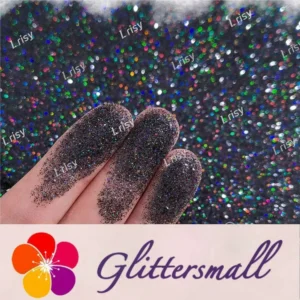
0.2mm Holographic Black Extra Fine Glitter (Ultra-thin) LB01000
Price range: $2.99 through $27.99
View options Three mistakes worth catching early
Approving the wet mixture
Approving the wet mixture is especially relevant to glitter for paint. This usually happens when the visual effect is chosen before the application has been defined. Reverse the order: establish the system, then compare effects that can work inside it.
Ignoring nozzle or roller limits
Ignoring nozzle or roller limits is especially relevant to glitter for paint. The missing condition often appears later as extra finishing work, inconsistent batches or a result that changes under normal lighting. Put that condition into the sample plan.
Assuming more glitter always creates more visible sparkle
Assuming more glitter always creates more visible sparkle is especially relevant to glitter for paint. A loose sample can still look excellent while the finished object fails the brief. Approval belongs to the finished construction and the recorded product code.
Questions readers ask before ordering
Can glitter be mixed directly into wall paint?
Only after testing the exact paint. Opaque pigment, film thickness and mixing can reduce visible sparkle or create unwanted texture.
For this glitter for paint decision, confirm the answer against the exact product and application equipment. Keep that result with the coded sample rather than relying on memory.
Why does glitter look weaker after paint dries?
Dry paint may surround or cover more of each particle. Particle orientation and the loss of wet gloss also change reflection.
For this glitter for paint decision, confirm the answer against the exact product and application equipment. Keep that result with the coded sample rather than relying on memory.
What particle size should be used in a coating?
Choose a cut the dry film and application equipment can carry. Larger particles may require a clear layer or surface-broadcast method.
For this glitter for paint decision, confirm the answer against the exact product and application equipment. Keep that result with the coded sample rather than relying on memory.
When is solvent-resistant glitter necessary?
Use it when the coating chemistry and test results show that ordinary material bleeds, fades or loses its finish.
For this glitter for paint decision, confirm the answer against the exact product and application equipment. Keep that result with the coded sample rather than relying on memory.
A concise buying brief
For a glitter for paint inquiry, send the supplier the intended application, base or binder, preferred size range, shape, finish, color family, required quantity, packaging and destination. Ask for the exact product code and documentation relevant to application equipment. Verify any marketing or compliance claim for that product and market before publishing it.
Use the GlittersMall shop to compare products for glitter for paint. The Glitter Guides explain material and size decisions; the Glitter Applications library continues into process-specific work.
Editorial note: This glitter for paint guide organizes selection and sampling decisions from the current GlittersMall catalog. It does not replace the instructions or approval of the relevant resin, coating, cosmetic or adhesive manufacturer. Product claims and suitability must be checked for the exact item and intended market before publication or production.